
The poultry industry faces a tricky challenge.
Customers want natural ingredients on labels, but they also demand less sodium in their food. Traditional solutions can cut salt, but they often create ingredient lists that look processed and chemical-heavy.
Smart poultry companies are finding better approaches.
By using proven sodium reduction strategies, they’re keeping labels clean while hitting the health targets that matter most to consumers.
Why Sodium Reduction Matters in Poultry
Chicken nuggets, seasoned strips, deli meats – these products all depend on salt. It adds flavor, keeps meat moist, and supports food safety. But retailers and restaurants are pushing harder than ever for lower sodium across the board.
And the pressure is real.
Americans eat about 3,400 mg of sodium daily, even though health experts recommend no more than 2,300 mg. That’s almost 50% more than the recommended limit. Too much sodium raises blood pressure, which increases the risk of heart disease and stroke.
Poultry products play a role in this gap.
Fresh chicken breast naturally contains only 60–70 mg of sodium per serving. But processed varieties like deli meats, pre-seasoned products, and restaurant meals can jump to 200–400 mg or more per serving. Add sides and sauces, and meals quickly overshoot daily limits.
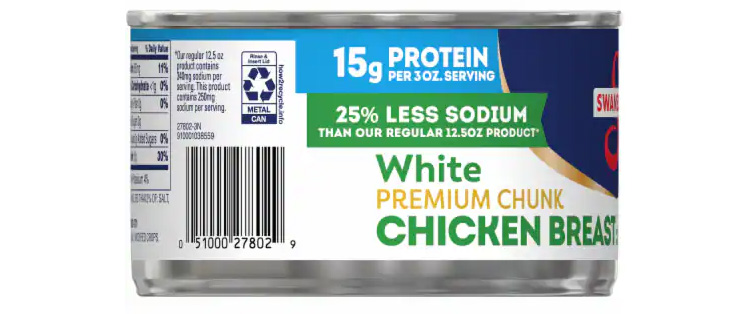
This puts processors in a bind:
- Cut sodium and risk losing the flavor consumers expect?
- Or keep taste intact and miss the health targets that drive purchasing decisions?
Forward-looking brands are showing there’s a third option.
Smart Solutions Beyond Simple Salt Cuts
Reducing sodium is all about making small, smart changes that preserve taste, function, and consumer trust.
The most common solution is potassium chloride, which replaces regular salt effectively and delivers similar flavor and technical benefits in processing. The problem used to be the label. To most consumers, “potassium chloride” sounds chemical and processed.
That changed in 2020 when the FDA approved the friendlier term “potassium salt.” This one adjustment made a big difference in consumer perception.
Old approach: Chicken breast, water, salt, potassium chloride, natural flavors
New approach: Chicken breast, water, salt, potassium salt, natural flavors
Same sodium reduction. Much better consumer appeal.
And the best part? This isn’t a one-size-fits-all solution.
Processors can adjust the ratio of salt to potassium salt depending on the product. Nuggets might use a 50–50 mix to keep kid-friendly taste intact. Deli turkey can lean more heavily on potassium salt for maximum reduction.
That flexibility allows companies to meet different taste profiles and health goals, without putting labels or consumer trust at risk.
Suppliers like TEKPAK help make this process smoother, providing potassium salt sourced from the Dead Sea that delivers both clean flavor and clean labeling.

How Industry Networks Speed Up Change
In poultry, word travels fast. People move between companies, bringing proven solutions with them. When one processor shows that potassium salt delivers the right balance of flavor, function, and labeling, that knowledge doesn’t stay siloed for long.
This matters because change doesn’t just happen in isolated pockets—it spreads. Once a few brands demonstrate success with clean sodium reduction, others follow. What starts as a competitive advantage quickly turns into a new baseline across the industry.
For procurement and operations teams, this means two things:
- Falling behind is costly. Customers notice when your products don’t match the health and labeling standards becoming the norm.
- The path is proven. You don’t have to reinvent the wheel. Solutions are already working in real plants, on real production lines.
In other words: sodium reduction is no longer a risky experiment. It’s an industry shift already in motion—and the question isn’t if it will happen, but whether your company is leading or catching up.
Operational Benefits That Keep Teams Happy
For many brands, the clean label story gets potassium salt in the door. But what keeps operations teams loyal are the practical benefits they see every day.
Reliability comes first. Potassium salt suppliers often maintain steadier availability compared to some traditional salt sources. That means fewer surprises in delivery schedules and smoother production planning.
Consistency keeps lines moving. Predictable particle size and flow mean fewer equipment hiccups and smoother runs. Packaging machines jam less. Seasonings apply evenly. QC teams catch fewer variations that slow things down.
Support seals the deal. Top suppliers don’t just ship product. They act as partners, helping R&D teams fine-tune recipes, adjust blends, and keep processing lines efficient. That mix of technical know-how and production insight makes reformulation less of a risk and more of an upgrade.
What Procurement Teams Need to Know
Switching to potassium salt isn’t just an R&D call. Procurement plays a key role in making sure new ingredients check every box. Here’s what to look for:
Food safety first. Nothing else matters if a supplier can’t pass audits. The best facilities earn AA ratings – the highest possible – showing their systems can stand up to any inspection. One contamination scare can undo years of brand trust. Don’t take shortcuts here.
Flexible ordering. Look for suppliers willing to start small. Being able to buy a few pallets for R&D before scaling up to truckloads helps teams test thoroughly without tying up capital.
Clear compliance. Get documentation that proves formulations meet FDA labeling requirements. Having this paperwork in purchase agreements protects your team when auditors come calling.
Real cost visibility. Ingredient price is just one piece. Factor in supply reliability, fewer reformulations, smoother production, and reduced QC rework. Often the total cost drops, even if the price per pound is higher.
Suppliers like TEKPAK make this process easier by offering flexible order sizes, AA-rated facilities, and documentation that satisfies even the toughest reviews.
The Competitive Landscape Today
Sodium reduction targets are tightening. Clean label demands are growing stronger. Together, these trends leave little room for companies that delay.
Early adopters already proved that potassium salt works in real products. The FDA is backing the effort with guidance and voluntary targets. At this point, it’s not about whether clean sodium reduction is possible, it’s about who can execute it best.
Making the Right Choice
The choice for poultry processors is clear: keep managing trade-offs between taste and health, or adopt smarter strategies that deliver both.
Smart sodium reduction doesn’t mean radical change. It means understanding proven options, choosing reliable suppliers, and implementing step by step.
The companies doing this well are already enjoying cleaner labels, happier operations teams, and stronger positioning in a competitive market.
Sodium reduction is no longer just a requirement; it’s an opportunity. With the right ingredients and supplier partnerships, it can boost both consumer trust and operational efficiency.
Exploring sodium reduction for poultry? Let’s talk. We can provide samples, discuss formulation targets, and help you evaluate the right salt blend for your product lines.